Six things we believe about agents that we used to be wrong about.
Bigger context windows aren’t a substitute for memory. RAG isn’t a feature, it’s a tool call. ‘Autonomous’ is a marketing word; what you actually want is reversible.

Co-founder & CTO, GOGOGO LLC
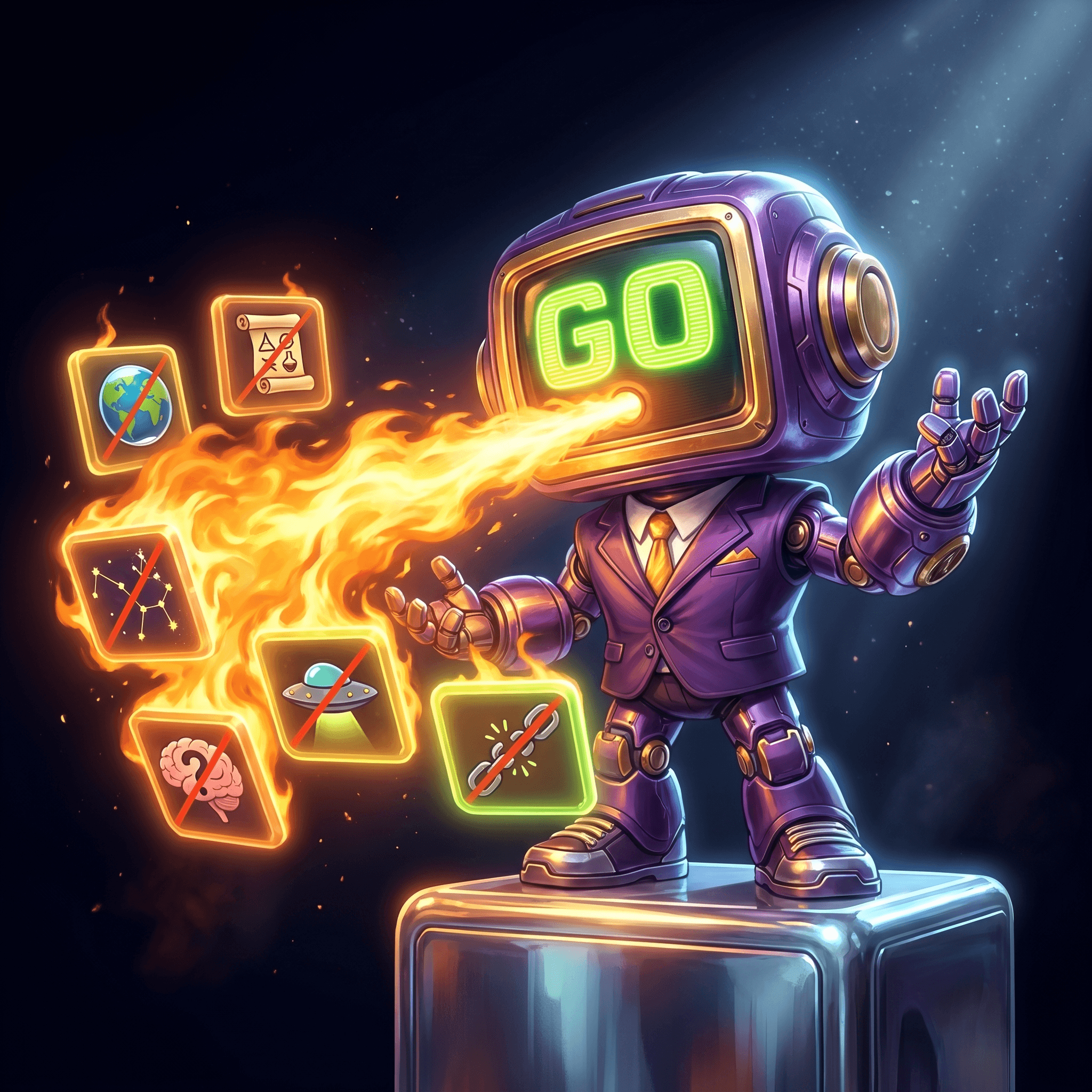
Two years of shipping multi-agent systems has changed our minds about basically everything. Here are six beliefs we now hold tightly that we used to dismiss, and one we still argue about internally.
1. Bigger context windows aren’t a substitute for memory.
We tried solving every memory problem with longer contexts. It worked until it didn’t: long contexts hide where information lives, and they cost more to debug than to redesign. Memory is structured. Cram less into the prompt; persist more.
2. RAG isn’t a feature, it’s a tool call.
Retrieval is a tool the agent decides to call when it needs something. We stopped pre-stuffing prompts with ‘relevant context’ and started letting agents call retrieval on demand. Better answers, smaller prompts, fewer surprises.
3. ‘Autonomous’ is a marketing word.
Customers don’t want autonomous. They want reversible. They want to know what the agent did, why it did it, and how to undo it. ‘Autonomy’ on its own is a liability surface. Reversibility is a feature.
4. Specialised agents beat one big agent.
Every time we’ve been tempted to ‘just make the model smarter,’ we’ve regretted it. A team of small specialists is faster, cheaper, and easier to audit than one model trying to be everything.
5. Demos lie. Production tells the truth.
Demo runs are short, well-prompted, and curated. Production runs are long, messy, and adversarial. Build for production traces, not for the demo deck.
6. The orchestrator should be boring.
Cleverness in the orchestrator is debt. The orchestrator’s only job is to pick the next agent and route the typed payload. Save the cleverness for the specialists.
What the six look like in practice
Beliefs are cheap until they change what you ship. Here is where each one shows up, in the products we and our sister company GOTONOM run and in the posts where we wrote them down at length.
- Memory: we keep it out of the prompt and give it structure, episodic and semantic, with forgetting as a feature rather than a bug. The four-layer model we use is in Memory is not a database.
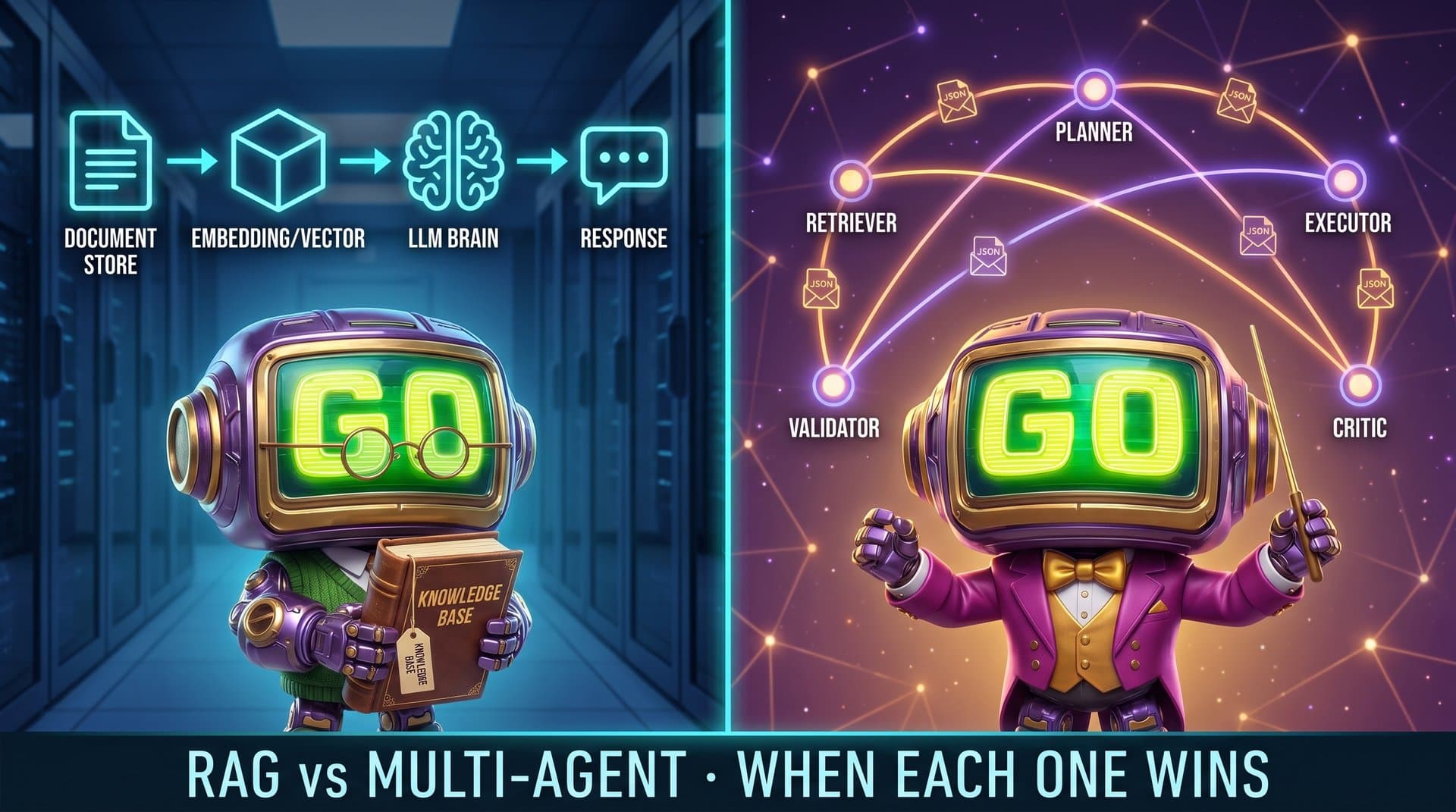
- Retrieval as a tool: when a single grounded answer is enough and when the job needs a team of agents is the subject of multi-agent vs RAG.
- Reversible over autonomous: in GoPeople, the assistant collects a leave request on WhatsApp, but an authorised person approves or rejects it in the panel, and that decision is recorded. The software does the routing; a person makes the call. In GoVista, content approval workflows keep anything unapproved from reaching a screen.
- Specialists: inside Goddo, one prompt passes through five separate stages, each of which can fail, retry or be replaced on its own. Even our mascots are specialists: the Wizard in Goddo, the HR Assistant in GoPeople, the Signage Operator in GoVista and the Vision Analyst in GoTrack.
- Demos versus production: the product sites mark their sample screens as samples. GoPeople’s dashboard preview says its people, companies and numbers are representative data, not customer results, and GoTrack publishes its measured tests as lab notes, with the method, so a reader can check them.
- A boring orchestrator: it picks the next agent, passes a typed payload and writes every step to the trace. That trace is the subject of Observability isn’t an add-on, and it is the first thing we suggest asking any vendor to show you, in how to evaluate an AI agent vendor.
What the six have in common is that each one moves a decision to a place where a person can see it: a stored fact instead of a stuffed prompt, a recorded approval instead of an autonomous action, a measured test instead of a polished demo, a trace instead of a reassurance. That part we no longer argue about.
“Demos sell the product. Production traces sell the trust.”