Multi-agent systems at GOGOGOA team of specialists,
not one giant model.
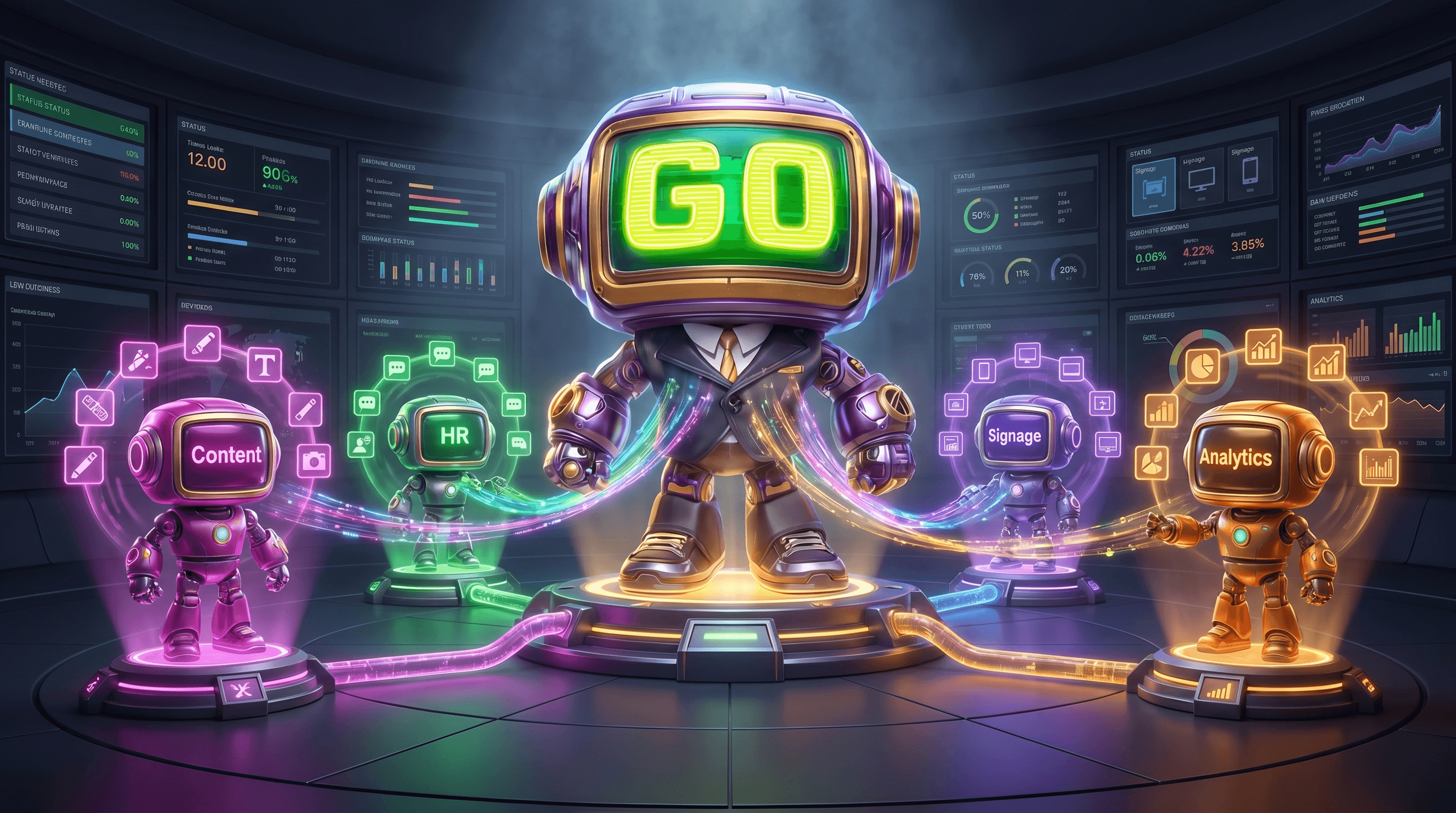
The GOGOGO multi-agent architecture: an orchestrator routing work between specialised agents, every step observable, every layer inspectable.
The Six Pillars
What makes a system multi-agent.
Six properties every GOGOGO system has. Together they turn an LLM into an operating layer.
01
Orchestrator pattern
A single coordinator routes work between specialised agents, never one giant model trying to do everything.
02
Specialised roles
Each agent has one job: content, HR, signage, vision, or analytics. Clear roles, clear blame, clear wins.
03
Tool use
Agents call real tools: APIs, databases, screens, chat, cameras. They don't just generate text; they ship outcomes.
04
Memory & context
Agents read what came before. Decisions, hand-offs, approvals: everything persists, everything is queryable.
05
Hand-off protocol
Specialists pass tasks to each other with a typed payload, no hidden state, no dropped balls.
06
Observability built in
Every step is logged, every decision is traceable. You can audit any cycle and roll back any change.
The Stack
Five layers, each one inspectable.
We don't hide the architecture. Every layer is auditable from the dashboard.
L1
OrchestratorRouting, coordination, and policy.
Owns the run-graph. Decides which agent handles a task next. Enforces guardrails.
L2
Specialised agentsOne role each. Concrete tools.
Each agent has one role and concrete tools, scoped to a specific product surface.
L3
Tool layerReal-world side effects.
WhatsApp, the Goddo API, integrations with GOTONOM A.Ş.'s GoVista and GoTrack, REST APIs to your stack.
L4
Memory & stateContext, decisions, audit.
Per-tenant, per-conversation, per-asset. Versioned. Queryable. Replayable.
L5
ObservabilityEyes on everything.
Every hand-off, tool call, score, and outcome: logged, traceable, reversible.
AI agents that
Work as a team.
Understand
Agents read messages, files, workflows, and context, not just prompts.
Coordinate
Specialists pass work to each other instead of doing it all alone.
Act
Trigger workflows, create content, update systems, send messages, support users.
Improve
Learn from usage, feedback, approvals, and operational signal, every cycle.
In production
Already running in production.


Further reading
How we build multi-agent systems, in depth.
 ArchitectureMay 19, 2026
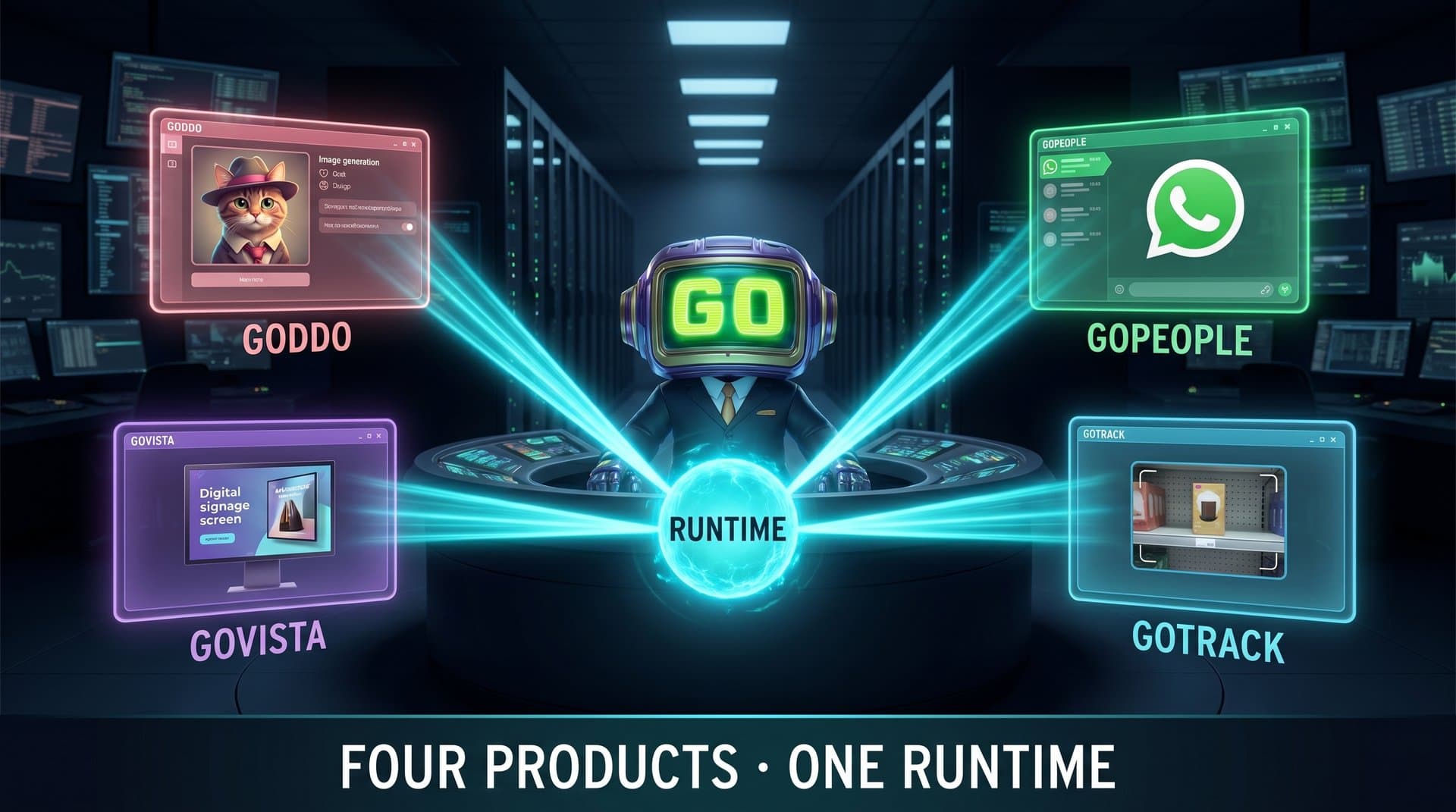
Three products on one runtime.
Goddo, GoPeople, GoVista: generative AI, HR over WhatsApp, digital-signage CMS. Three different categories, three different customer types, one multi-agent runtime underneath. Here's the architecture, the decisions, and what nearly broke.
9 min readRead post EngineeringMay 21, 2026
Memory is not a database.
The most common mistake in multi-agent design is treating agent memory as a database: store everything, retrieve on query. A database remembers perfectly and forgets nothing, and that is exactly the wrong shape for a mind. Here's how we actually build agent memory at GOGOGO: episodic vs semantic, why forgetting is a feature, and the four-layer model we use.
10 min readRead post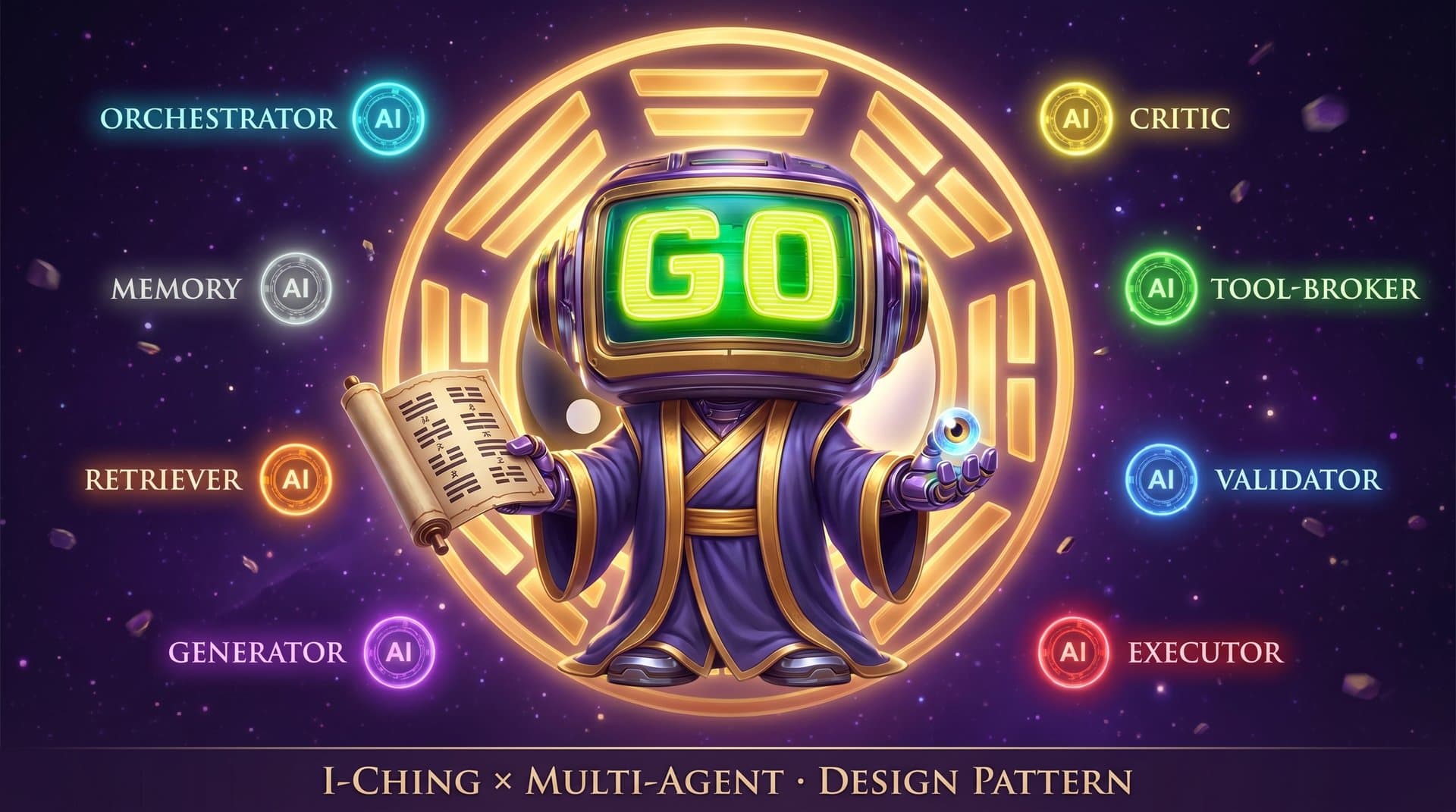 Design patternMay 18, 2026
I-Ching as a multi-agent design pattern.
Eight trigrams. Eight agent role archetypes. The 4,000-year-old framework for understanding how forces combine maps surprisingly cleanly onto how specialised agents combine into a working system. Here's the pattern we ended up with, and what each trigram actually contributes.
8 min readRead post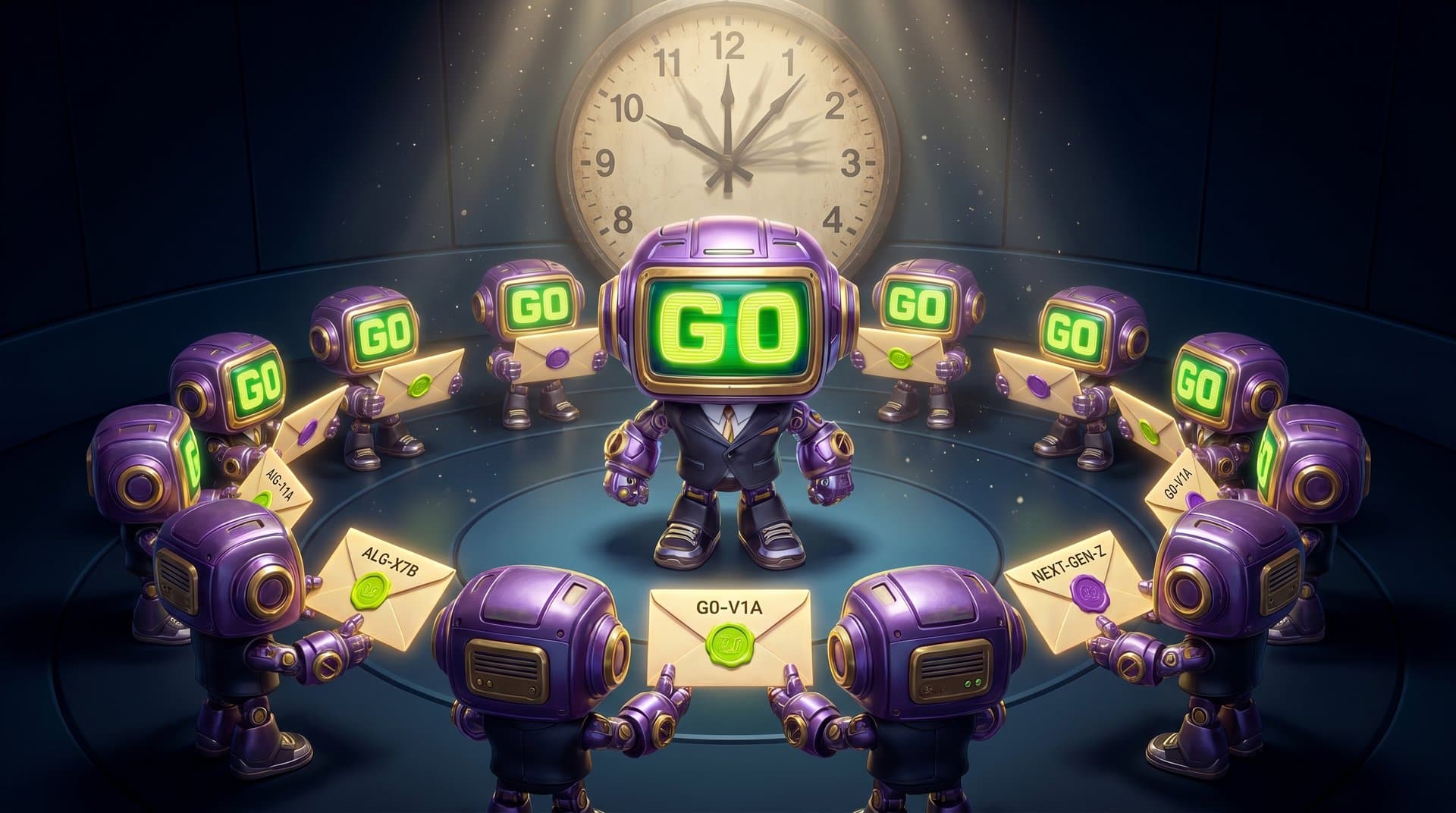 ArchitectureMay 22, 2026
Quantum-resistant agent systems: what changes when agents outlive their keys.
Most discussion of post-quantum cryptography assumes a single application protecting today's data. Multi-agent systems are different. The same product has many agents passing signed state to each other, persisting traces that must verify for years, and federating with outside systems whose crypto choices we don't control. Three things change when post-quantum meets multi-agent, and one architectural bet pays off across all of them.
11 min readRead post
Want this for your business?
Tell us the workflow you'd build first. We'll come back with the agents, the orchestrator, and the four-phase plan.