How GoTrack tells which product and colour is in a shopper’s hand — and why it shows a pair instead of guessing.
GoTrack, made by our sister company GOTONOM A.Ş., reports which product and colour is picked up, how long it is held and whether it goes back. When two products are near-identical, it says so — a pair, not a guess. Here’s what it recognises and why that choice matters.
GOGOGO team
On GoTrack, by our sister company GOTONOM A.Ş.
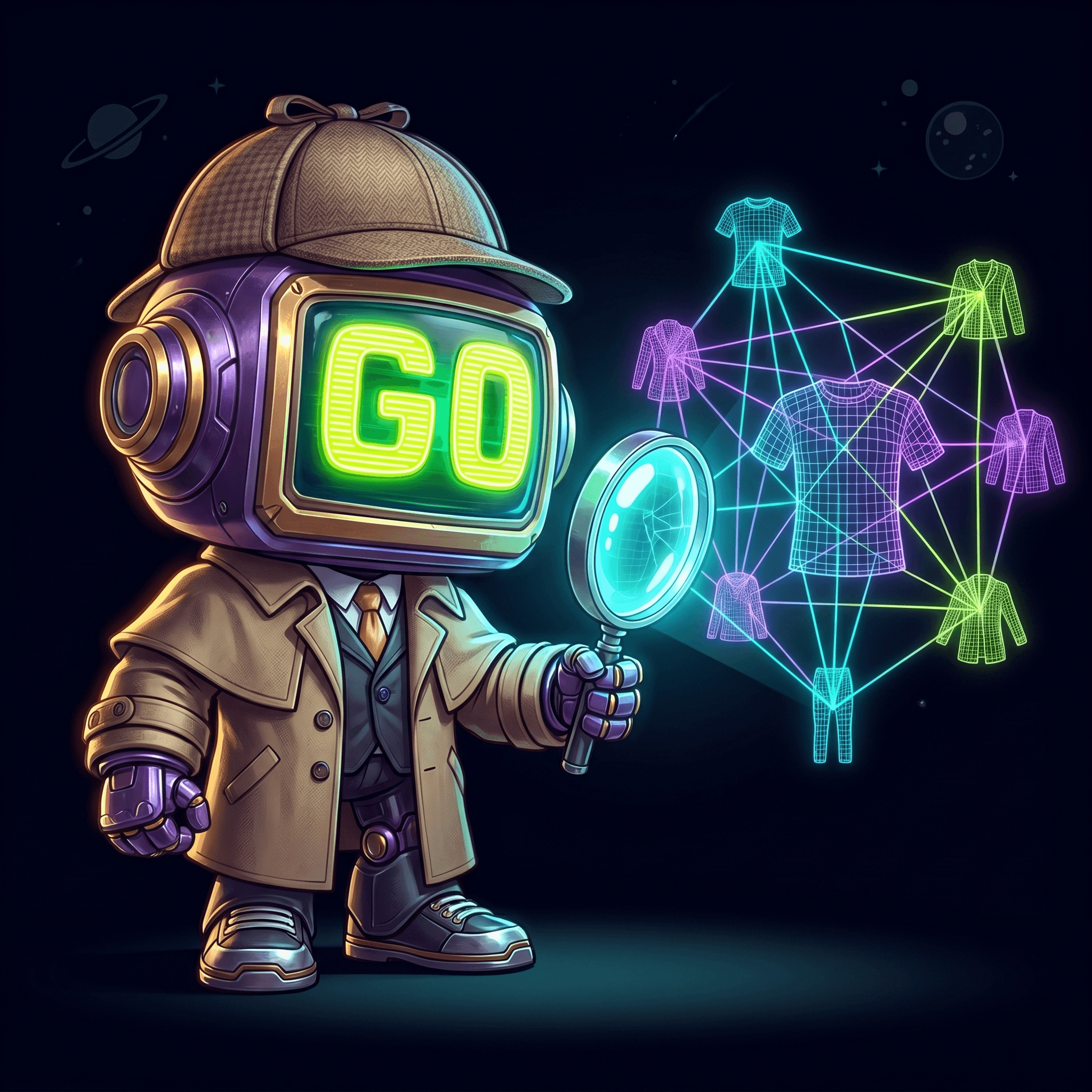
GoTrack is made by GOTONOM A.Ş., our sister company in İstanbul (same founding team) — official site gotrackgo.com. We get asked about it often enough that it deserves a plain-language post here: what it actually recognises, and why it sometimes answers with two products instead of one.
The question a retailer actually asks
A store already knows what it sold. What it doesn’t see is what happened before the till: which product was picked up, in which colour, how long it was held, and whether it went back to the shelf. That is the gap GoTrack is built for — in-store product analytics and smart screens for physical retail.
Cameras close to the products
GoTrack uses its own cameras, placed close to the products. From there it measures, per product, colour, zone and store:
- which product and colour is picked up;
- how long it is held;
- whether it is put back;
- which products are never touched;
- which products are picked up and compared together;
- activity by hour and zone;
- which screen content goes with longer holds.
Colour is part of the answer, not a footnote. A count that says ‘the jacket’ answers half the question; ‘the jacket in navy, picked up and put back’ is something a buyer can act on.
Recognising the product, not the person
Images are processed on a device in the store and are not stored by default. There is no face recognition, no biometric template and no shopper identity — the cloud receives product events, not video. If the connection drops, GoTrack keeps working offline and sends the events when the connection returns.
When two products look the same: a pair, not a guess
Some products are near-identical on camera. Shades of the same product in the same packaging are the classic case. When that happens, GoTrack may report the two as a pair rather than pick one of them.
That is a deliberate choice. A confident wrong answer looks exactly like a right one in a report, and nobody can find it afterwards — it quietly moves a pickup from one product’s numbers to another’s. An honest pair is visible: the retailer sees that two products were in play and can read the numbers accordingly.
The optional screen
A screen beside the shelf can show the product while the shopper holds it. Screens are optional — the analytics works with cameras alone. In GOTONOM’s measured test (30 September 2026, test setup, 24 fires), the time from recognising the product in hand to its content on screen had a median of 0.35 s with one product and 0.51 s with two products sharing a screen; the slowest was 0.71 s. On the same date, 25 of 25 fires reached the screen. The time from the lift itself to recognition is not measured. Method and numbers.
A pickup is not a sale
Cameras see that a product was picked up and whether it came back to its shelf. They don’t see a sale — ‘not returned’ is not ‘sold’. Purchase numbers come from joining GoTrack’s exports with the retailer’s own POS or BI data; GoTrack does not read POS data.
Exports are CSV and PDF. Signed webhooks (HMAC-SHA256) carry pickup, return, touch_interaction, screen_paired, screen_offline and test events, documented with Python, Node.js and PHP examples and a JSON Schema at github.com/gotonom/gotrack-integrations.
Where it runs today
GoTrack is live in apparel and footwear stores today. Fragrance, cosmetics, watches, bags, electronics and grocery start with a pilot. For a demo or pricing, talk to GOTONOM at gotrackgo.com; the overview on this site is at /products/gotrack.
“A wrong answer that looks confident is worse than an honest pair. Report what you can see; say so when you can’t tell.”